
Gluten Free Air Fryer British Scones

Learn how to make gluten free air fryer British scones. Learn all the tips for scones that rise well, but this time adjusted for a gluten free version, and baked in the air fryer! Let me show you how...
Gluten Free Air Fryer British Scones
Step-by-step tutorial
**As an affiliate for M&S, I will receive a small commission, as no cost to you, should you buy via my link below


***click to jump to section


What Are Gluten-free Air fryer Scones?
These gluten free scones, are my recipe for British scones (not to be confused with American scones, or even American biscuits).
Traditional British scones, but with a gluten-free flour. All baked in an air fryer, (even a small basket air fryer).
If you want to learn more about British scones & the history of our scones, check out my Cream Tea article.
Scones used for a Cream tea setup.


Why Use This Recipe?
A few reasons why you should try my recipe:
- Quick & easy recipe
- Gluten-free
- Make in the oven or air fryer (any size)
- Energy & money-saving method
- Taste great!
- Full step-by-step instructions
- Video tutorial
- No decoration required
- Enjoy with your favourite fillings
- Reliable recipe from experience

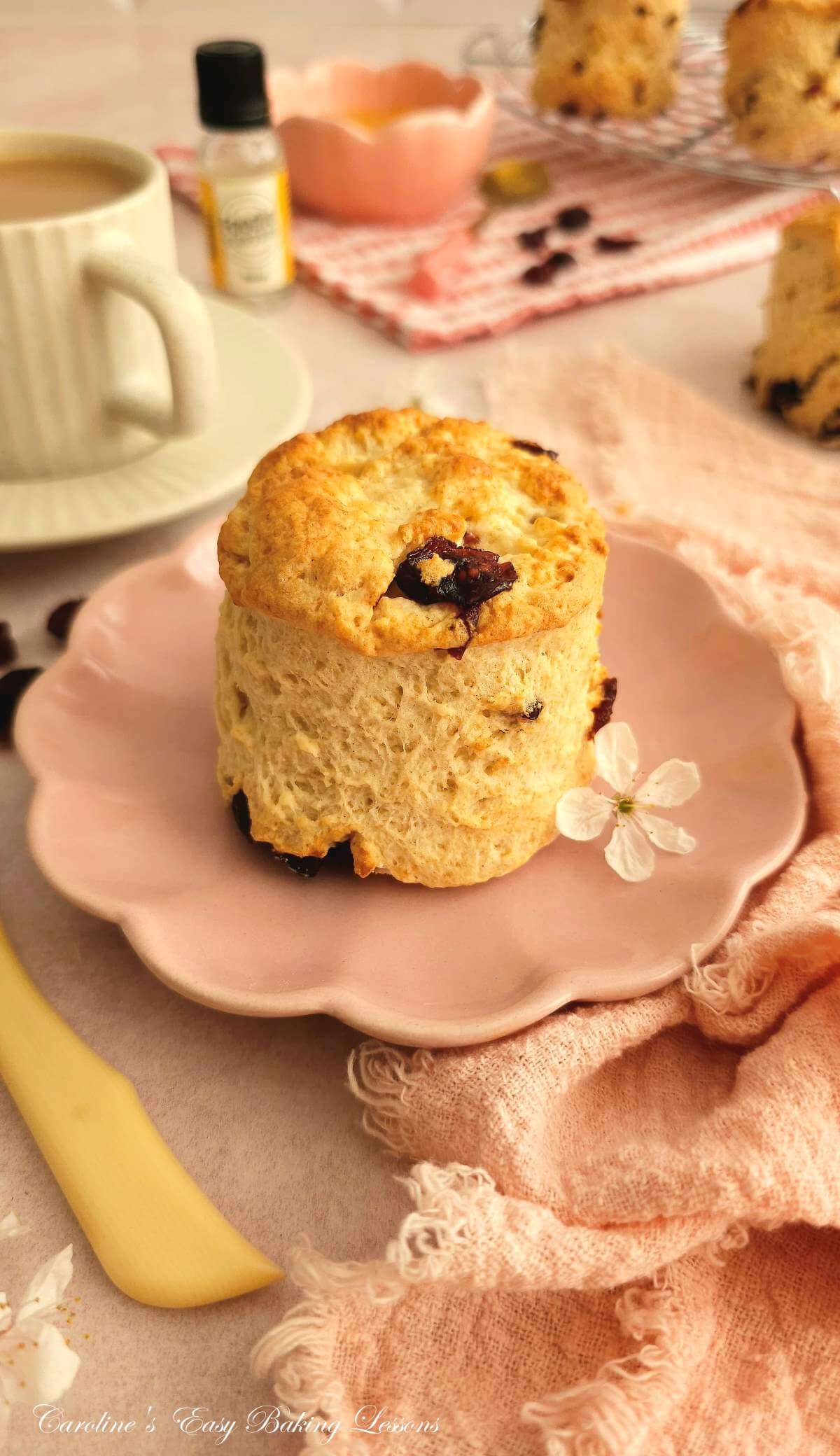
2 Big Reasons To Use My Recipe
If you know my recipe tutorials, I write thorough step-by-step recipes and include helpful photos and videos for you to succeed in your baking. I am Scottish & I live in Britain, with a true knowledge of how our scones should taste & look.
After a lot of time practicing & tweaking my scone recipe, I developed the perfect recipe tutorial.
With British scones, the key is WHAT NOT TO DO!! Not doing certain things (including things that might be your first instinct to do), will help achieve the classic rise & split structure of these scones. They should never be flat & always rise well.
(Photo here of my Mango cranberry air fryer scones.)
But you don’t need to take my word for it about my recipe and tutorial. My theories around creating the perfect scone, were tested worldwide back in 2020.


We had a global bake-along weekend, involving many bakers in my Facebook group Great British Bake Off Fans, where we all used my recipe to make the scones. Many had either never tried scones or always failed in the past. During this fun activity, over 1000 scones were made that weekend. The results were great. The recipe was tested using American All Purpose flour, gluten-free flour, lactose-free milk and even using goats butter, all with success.
You can see just some of the bakers’ scones in the photo collage here. Click to join the Facebook baking group.
So today, I am writing up the gluten-free version, rather than just adding annotations to my regular scones recipe.


Ingredient Notes
My recipe for air fryer gluten-free British scones is made up of the following basic ingredients:
- Unsalted butter
- Caster Sugar*
- Gluten-free Flour*
- Xanthan Gum*
- Gluten-free Baking Powder
- Milk
- Eggs
*denotes see notes below
Baking Powder
Baking powder is very important for a good rise in British scones. If making for someone who is on a gluten-free diet, make sure to also use gluten-free baking powder. In the UK, you can easily source Dr Oetker baking powder that is certified gluten-free.

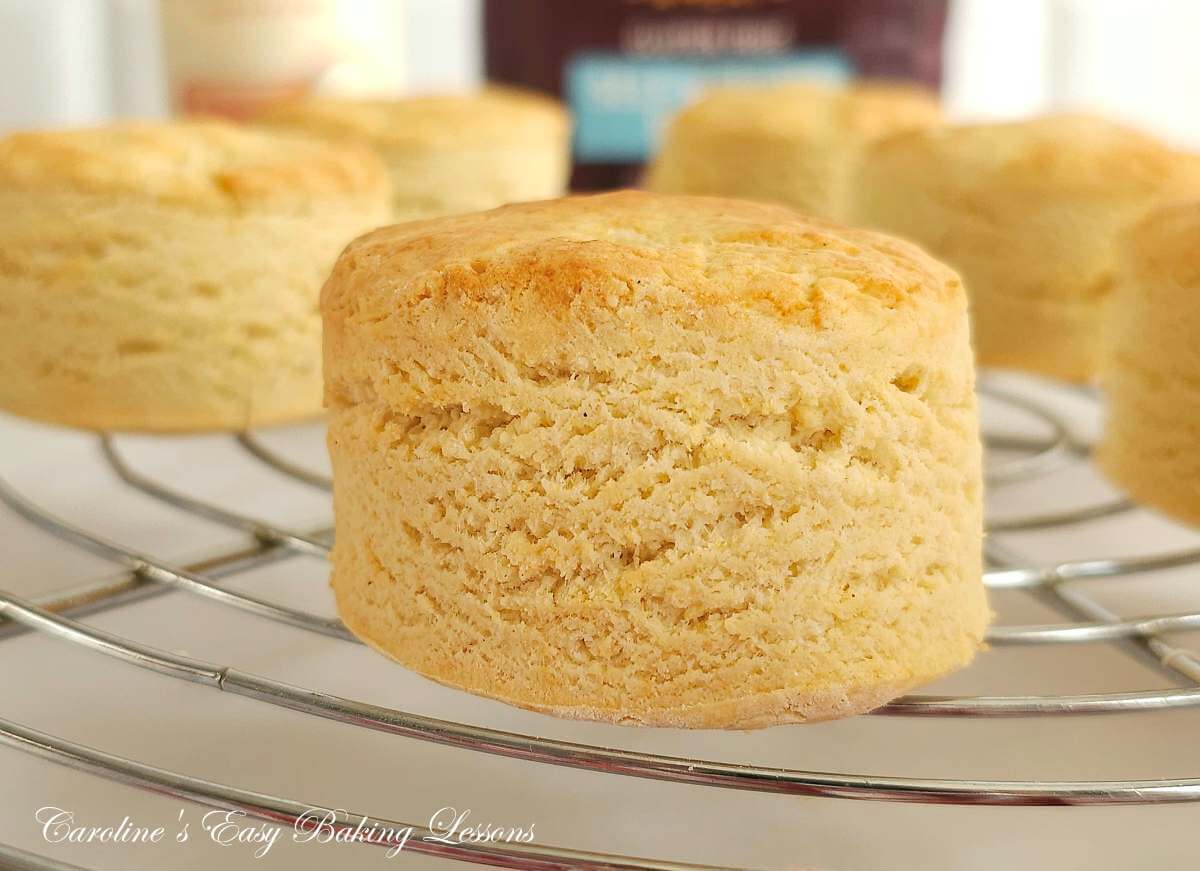
Milk
Milk adds moisture, fat, protein and adds flavour. Any milk, even lactose-free or goats’ milk will work. Only noticeable difference is a paler colour to the tops of the scones. You can also use buttermilk.
Unsalted Butter
Unsalted butter is always recommended for baking, even if it is for a savoury bake. Apart from controlling the salt intake, the main reason is due to water content.


Salted butter has more water content, and hence a lower fat content. The amount of water can also vary from brand-to-brand, leading to inconsistent results.
You may have heard that European butter is often better, (for things like making puff pastry). And this is because of the higher fat percentage. And as you can imagine, fat reacts much better in our bakes, than water does. Heard, or experienced any sudden baking fails? Cookies suddenly going flat after years of making them? This is more than likely because a lot of US manufacturers are increasing the water content in the salted butter to cut costs, especially since Covid.
If you have Double (Whipping) Cream about to expire, make your own butter. Read how to make buttermilk & butter at home, that you can even freeze. And, you can use the buttermilk from this to make in your scones too.


Flour
Gluten-free Plain (All Purpose) flour was used in the recipe development.
I tested Doves Farm/Freee Gluten-free Plain flour.
I also used Marks & Spencer’s own brand Free of wheat, Gluten-free Self-raising Flour, as shown in the images and the video tutorial.
***Please note I am an affiliate for Marks & Spencer and as such, I will receive a small commission, (at no cost to you), should you purchase this flour via my personal link to their site. These really help keep my site free to all.
Both Plain (A.P.) flour and UK Self-raising flour work, but the Plain flour requires more baking powder.
(All amounts listed in the Recipe Card below).


Xanthan Gum
The Xanthan Gum is also very important for gluten-free bakes. It helps bind the ingredients to support structure that can sometimes be lacking when there is no gluten.
I use and recommend using brand Freee Foods Xanthan Gum. (Shown in a lot of the photos and in this one here). They also do their own gluten-free flour.
This is available online or in most supermarkets like Asda, Sainsburys & Tesco.
Just a note but, that if the gluten-free flour you use contains Xanthan Gum, or any Guar Gum in it, then you can omit adding the Xanthan gum.


Caster Sugar
A lot of our British baking uses Caster Sugar. This is basically US Extra/Super Fine Sugar.
This sugar granule, (that is finer than granulated sugar), should not be substituted. It is a small amount of sugar, and not there for sweetness, but rather to help with structure. It can enhance texture & crumb, and because it attracts & retains moisture, it prolongs the freshness of the baked goods.
You can make your own Caster/Fine Sugar, by lightly grinding/processing granulated sugar. (See photo)


Eggs
Eggs play an integral part in achieving a nice height in your scones. A high source of protein, (especially desired in gluten-free recipes), they not only help bind the ingredients together. The eggs provide fat as well as the protein, and in turn provide structure, strength & texture.
UK recipes usually use medium or large sized eggs and US equivalent is large to extra-large sized.
Top Tips For Eggs:
- Use the eggs at room temperature for best results & to combine better.
- Beat the eggs before using – this ‘wakes up’ (activates) the protein and works more effectively.


Equipment
Not much in the way of baking equipment needed to make scones. A pastry cutter (also called a pastry blender) can be used for making the scones if your hands get tired/sore easily. (See photo). But it is not essential, and 2 butter knives, or even your fingertips can be used instead.
Some people use a food processor, but I do not recommend it, as the best results for scones come from little and gentle handling.
A round cookie cutter is used: 5½-6cm or 1⅙-2⅓″, mine is 5¾cm or 2¼”.


Air fryer Or Oven
These scones can of course be baked all at once in a regular oven, but my British scones recipe was developed for air fryer use back in 2022. Testing involved using a small 3.5 litre capacity (about 3.7 quarts) basket air fryer. (Shown here in the photo collage, where I was working out how many scones I can bake at one time).
Subsequent tests have also yielded positive results from open front, larger air fryers. The only difference being, basket air fryers, usually require turning over part-way through baking.


You can see me testing British brand Cello’s double air fryer by using my scones recipe. (The mint green air fryer in this photo).
One test in the small basket air fryer drawer and one in the open front oven.
Or jump to reading the air fryer review by clicking on the air fryer image.
Recipe Yield
This recipe makes 10-11 scones, if you cut using the recommended size cookie cutter & thickness about 1″/2.5cm.


Top Tips
I always advise the following things NOT TO DO:
- DO NOT use a food processor
- DO NOT roll out the dough
- DO NOT pat out thinner than 1″ (2.5cm) deep.
- DO NOT twist the cutter – it impedes the rise of the scone.
- DO NOT touch the sides of the scones
- DO NOT let the egg-wash drip down the sides
- DO NOT be rough with the dough – light hands
- DO NOT use cold butter straight from the fridge
All of these actions can impede the rise that you are aiming for in these British scones.
You can read more about these scone tips on my , original British Scones tutorial, or watch the full-length video on YouTube used during the group bakealong.**
Step-by-Step Instructions
***First check how many scones you will be able to bake at one time if using a basket air fryer. Use the recommended size range of cookie cutter and see how many will fit. My small air fryer can take 4 at one time.


Prepare The Dough
1.Cut the butter into small cubes when measuring/weighing it out. Roughly about 1 cm, ⅓” size and this smaller surface area allows the butter to soften quicker. No need for fridge cold butter for scones.
2.If you can push your thumb into a piece of butter and leave an indent, the butter is ready.
3.Add the flour, Xanthan Gum and baking powder to a mixing bowl. **If using Plain (All Purpose) flour, add the 2 amounts of baking powder. 7.5 tsp (2.5 tbsp) baking powder (yes this amount is correct). For the UK Self-raising flour, only add2 level tsp of baking powder.
4.Give a quick mix together, before adding in the softened cubes of butter. (See Photo collage 1).


5.Briefly mix to coat the butter pieces in flour, before starting to ‘cut in’ the butter. This just means working the butter until it is in smaller pieces & coated in flour. We want a mixture resembling large breadcrumbs consistency but does not need to be perfect.
6.To do this you have a few options. My usual method is to use a Pastry Cutter/Pastry Blender (See Photo collage 2). I use this as my hands get sore easily. To use, push down on the mixture, making contact with the bottom of the bowl, and rotate the blender, left and right.
7.Repeat this rotating motion across the bowl and unblock the blender when needed. I usually spend less than a minute doing this.


8. Alternatively, you can use 2 butter knives or your fingers to work in the butter.
To use your hands, just lift some of the mixture up in your fingers, and rub your thumb across your fingertips. Repeat rubbing the flour and butter between your fingertips till the right consistency.
I tend to use the pastry cutter, and then check by using my fingers for about 10 seconds. Lifting the mixture up high also incorporates some air into the mixture. Watch video below for how this is done.


9.Now mix in the Caster sugar & then make a well in the centre of the mixture. Leave to the side.
10. Take your jug and break in the 2 eggs.
11.Whisk the eggs (this activates the protein and hence the gluten strands to help us create structure in this gluten-free scones, so be sure to give a good whisk).
12.Add in the milk, until you get to the 300ml (10 fl oz) or 1 1/2 cups level. Then whisk to combine well.
13.Reserve 2 tbsp into a small dish for later.


14.Add half of the milk/egg mixture to the well in the centre of the mixing bowl.
15.Use a spatula to start working in the liquid.
16.Very gradually start to add more liquid, mixing in-between each addition and being sure to press down on the flour, making it take on more liquid before adding anymore. You might not need all the liquid, and should always check for any dry patches at the bottom of the bowl. The dough should just be a little sticky.
17. Once the dough starts to come together, get your hands in and very briefly knead into a smooth dough.


18. Form into a ball and then a disc shape.
19. Place on some lightly floured baking/parchment paper.
20. Use your hands to pat out the dough. DO NOT USE A ROLLING PIN. We want to be as gentle as possible with the dough and we don’t want the dough too thin.
21.Pat it out from the centre, working your way out, aiming for an even thickness, of at least 1″ (2.5cm). This is important for a good rise. You can measure the depth of your cookie cutter for reference, or in my case, tip of my thumb to first knuckle, is about 1″.


Cutting Out The Scones
1.Paper-line 1 or 2 baking trays/baking sheets if using a regular oven or larger open-front air fryer. Otherwise, have a sheet of baking paper ready for when the scones are cut.
2.Dip your cookie cutter in a small dish of flour (I prefer to not use the fluted size to help beginners achieve a good rise).
3.Before cutting out the scones, lightly make an impression of the top of the dough to see how to best get as many cut out from this first round. **The first cut, always rise and look more ‘perfect’. I can usually get 6 in the first cutting. (See Photo collage 7).
3.Push down on the cutter to cut out the scone, making sure NOT TO TWIST THE CUTTER. This impedes the rise of the scones.
4. Transfer the scone, very carefully, without touching the sides, to a paper-lined tray or just the paper.

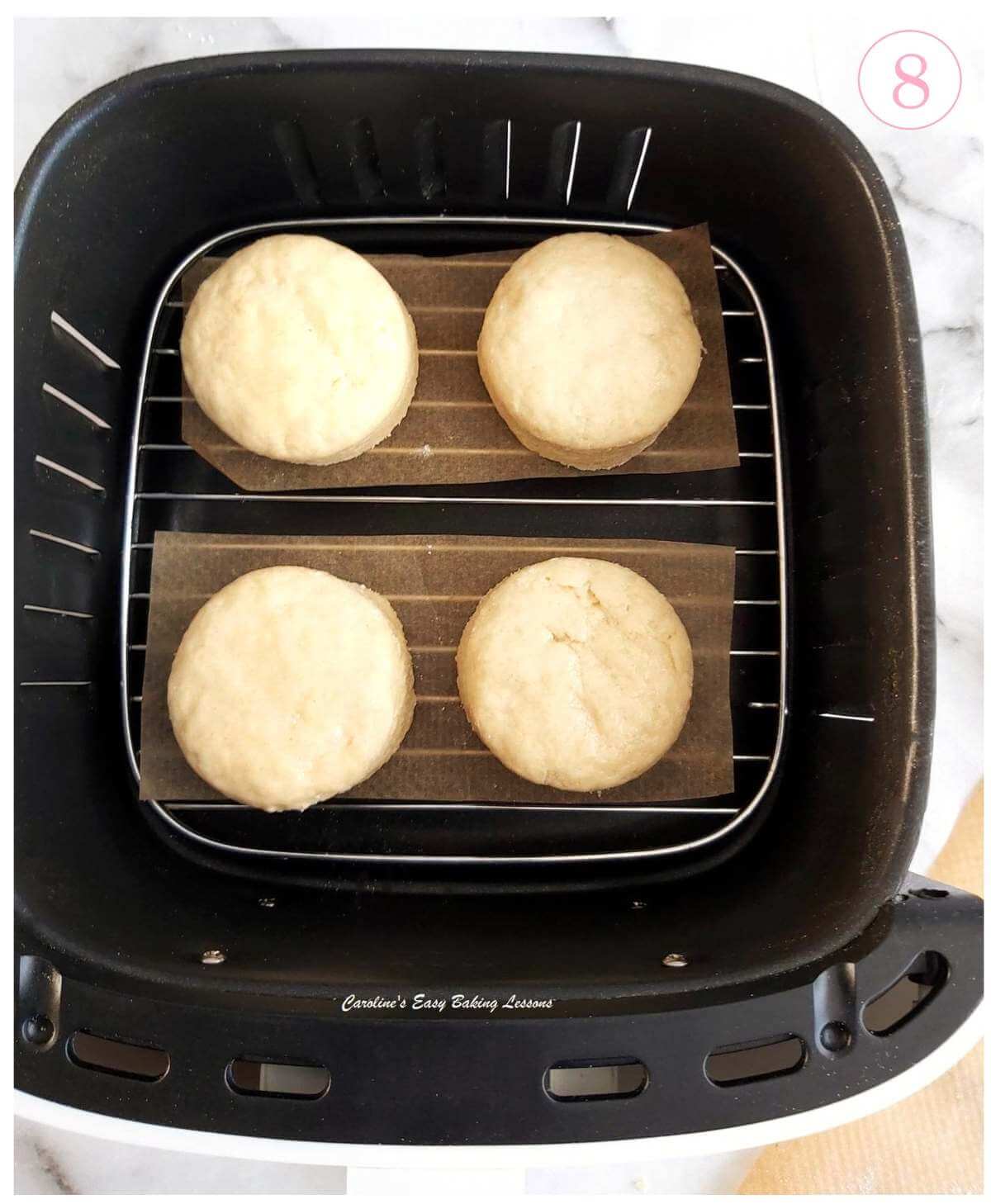
5. Carefully brush the reserved egg/milk mixture onto the top of the scones as an egg-wash. DO NOT LET ANY DROP DOWN THE SIDES. To do this, tap the wet brush first, then brush on from the centre of the scone, working your way out.
6. For basket air fryers, you want to use the rack it came with, but make sure there is plenty of room above. Paper-line only with a large enough piece of paper, to house the scones and let the scones hold the paper down.
DO NOT BAKE DIRECT WITHOUT PAPER. And DO NOT LET PAPER MOVE OR FLY ABOUT IN THE AIR FRYER. Always weigh it down and ensure your baking/parchment paper is fine for high temperatures.


Baking The Scones
1.Carefully transfer the scones using a palette knife or spatula, onto the paper. (For basket air fryers, you can choose to apply the egg-wash once in the basket if you like).
2. Bake the scones at: 200°c/180°c fan/400°f (Gas Mark 6). ***For air fryers, and particularly newer or quite powerful air fryers, I recommend using the Fan Oven temperature. This is 20°c lower and can stop the scone colouring too much on the top, too soon. You will know your air fryer best, and the beauty of baking in batches, is you can adjust with experience to best suit your particular air fryer.


**Sign up to my newsletter to get your own free copy of my oven temperature conversions table, that also includes air fryer temperatures. See the sign up form below, just after the Recipe Card.
3.For basket air fryers, bake the scones for 8 minutes. By this time the scones will have risen well and coloured nicely. But they need turned over to finish off baking.
4.Carefully turn them over and brush on any remaining egg-wash. Continue baking for another 4-6 minutes until coloured.


5. For regular ovens or larger open-front air fryers, you probably won’t need to turn the scones over, provided you baked in the centre on the oven/air fryer. In which case, bake for a time of 11-15 minutes.
6. Meanwhile gather the scraps of dough together and gently knead as little as possible, back to a depth of at least 1″ (2.5cm). Cut out more scones and repeat till the dough is finished.
7.Transfer the cooked scones to a cooling rack. Then continue baking the remaining scones until all are baked.


Serving & Storing
1.Serve the scones, sliced (or just pulled apart), and top each half with: jam, curds, butter and cream. Clotted cream is very traditional but some freshly whipped cream also works great. Since you are not eating in one stacked scone, you can even add some slices of strawberries too,
Check out my jams & curds page, for homemade goodies, like blueberry orange curd!
2.Store cooled scones in a metal cake or cookie tin, with the paper it was baked on. Leave out at room temperature, and these scones will be fine for up to 7 days*. **Don’t place in the fridge, as it can cause condensation and make them too soft.


3. British scones freeze really well. Wrap individually in some baking/parchment paper, then cling film (plastic wrap) or foil and in a labelled bag or container. Several layers of covering stops any freezer burn. They are fine frozen for up to 3 months1.
4.Defrost scones on the worktop (not the fridge) a few hours before you want them. Before serving, slice the scone in half and even popping in the microwave for 20-30 seconds maximum, and they are like new. With a little warmth. Alternatively, warm in the air fryer at moderate temperature for a few minutes.
DIFFICULTY LEVEL: Beginner, not too hard
Recipe Card
Gluten-free Air Fryer British Scones

Equipment
- Scales or measuring cups
- Measuring Spoons
- Mixing spoon
- Jug
- Large mixing bowl
- Pastry Cutter/Pastry Blender (optional – or 2 butter knives, or use fingers)
- Whisk or fork
- Baking/parchment paper (make sure good for hot temperatures)
- Round Cookie Cutter (5½-6cm or 1⅙-2⅓″, mine is 5¾cm or 2¼")
- Small bowl/dish (for egg-wash)
- Pastry Brush (or clean artist brush)
- Air Fryer (or regular oven)
- Cooling rack
Ingredients
Dry Ingredients:
- 450 grams Gluten-free Plain Flour (15¾ oz, 3⅔ cups Gluten-free All Purpose Flour)*
- 7½ tsp Baking Powder (level tsp, Yes, correct amount – only use 2 tsp for UK Self-raising flour)*
- 1⅛ tsp Xanthan Gum (see notes*)
Wet Ingredients:
- 50 grams Caster Sugar (1¾ oz, level ¼ cup Extra/Super Fine Sugar)*
- 75 grams Unsalted Butter (cubed small & a little softened, 2½ oz or level ⅔ stick or ⅓ cup)*
- 2 Eggs (Medium to large, US – Large or Extra Large)*
- 240 ml Milk (1 cup, 8 fl oz – approx., or Buttermilk)*
- * Denotes -see notes

Instructions
- Before beginning baking, if using a small basket-style air fryer, check how many scones you can bake at one time. Using the recommended cutter, I can bake 4 at one time.
Prepare The Dough:
- Cube the 75 grams Unsalted Butter into small pieces, roughly 1 cm, ⅓” in size for quicker softening. No need for fridge-cold butter for scones.
- Once the butter is soft enough to leave an indent with your thumb, add the 450 grams Gluten-free Plain Flour , the 1⅛ tsp Xanthan Gum and 7½ tsp Baking Powder to a mixing bowl. *** (For Plain/A.P. flour add the 2½ tbsp baking powder. For UK self-raising flour, only add 2 level tsp of baking powder).
- Mix briefly before adding in the butter cubes, and little mixing. Use a pastry cutter (pastry blender), 2 butter knives or your finger tips to ‘cut in’ or ‘rub in’ the butter. You are aiming for a rough large breadcrumb consistency. (For more on this see the step-by-step directions & images before this recipe card, or watch the video). DO NOT USE A FOOD PROCESSOR.
- Mix in the 50 grams Caster Sugar & make a well in the centre before placing to the side.
- Break the 2 Eggs into a jug & give a really good whisk, before topping up with milk, to the 300ml (10 fl oz) or 1 1/2 cups level. Whisk again and reserve 2 tbsp for later.
- Add half of the milk/egg mixture to the dry ingredients and start to work in. Gradually add small amounts of the liquid until the dough starts to come together. You might not need all of the liquid or a little more. Get your hands in when starting to form and knead very briefly to form into a ball and then a disc. The dough should be just a little bit sticky.
- Lightly flour some baking/parchment paper and place down the disc of dough. Use your hands to pat out the dough. DO NOT USE A ROLLING PIN. Start from the centre and pat out to a thickness of at least 1” (2.5cm).
Cutting Out The Scones:
- Paper-line a baking sheet/baking tray if using a regular oven or larger open-front air fryer. Otherwise, have a sheet of baking paper ready for when the scones are cut.
- Dip the straight edge of the cookie cutter in a little flour & then gently mark the surface of the dough to see how best to cut to get 6 scones at one time. You want as many from the first round as possible.
- Push down on the cutter MAKING SURE NOT TO TWIST IT. Cut out all the scones. Transfer to the paper (trying not to touch the sides of the scones). Pull back excess dough to release scones if necessary.
- Very carefully brush the reserved egg wash on top of the scones. DO NOT LET IT DRIP DOWN THE SIDES. Tap the brush of excess liquid, then start brushing from the centre out.
- If using a small basket air fryer, use the rack it came with so the scones are not touching the bottom of the basket. Cut just enough paper to go under the scones your air fryer will take. (mine 4, and only ever on one level). DO NOT HAVE EXCESS PAPER AS IT IS A FIRE HAZARD IN AIR FRYERS. You can’t bake without paper but. Always make sure any paper is weighed down.
Baking The Scones:
- Carefully transfer the scones with a palette knife or spatula, onto the paper in the basket air fryer you can pick to egg-wash once in the air fryer if you like).
- Bake the scones at a temperature of 200°c/180°c fan/400°F (Gas Mark 6), for regular oven. For newer air fryers, or ones particularly strong, I recommend using the lower temperature of fan oven. (180°c fan, 360-375°F). Use your judgement for your own air fryer, or test with the first scones.
- Basket air fryer, bake for 8 minutes till golden and risen. Then turn the scones over and brush on any remaining egg-wash before baking for another 4- 6 minutes. For larger air fryers or regular oven, the turning over is not required and so bake for about 12-15 minutes. Leave to cool on a rack.
- While the scones are baking, you can bring together the scraps of dough and cut out more scones. Be as gentle as possible with the dough.
Serving & Storing:
- You can serve the freshly baked scones a little warm, halved with some butter. Or eat at room temperature, with toppings like jam, curd, clotted cream or whipped cream. Add some sliced berries too.
- Store cooled scones in a metal cookie or cake tin, with the same baking/parchment paper, at room temperature and they will be fine for up to 7 days. DO NOT STORE IN THE FRIDGE.
- The scones freeze well, when wrapped individually in paper then cling film/plastic wrap or foil and then into a labelled food bag or air-tight container. This helps prevent freezer burn. Freeze for up to 3 months1 and defrost on the worktop (counter) for a few hours. You can slice in half and place in the microwave for 20-30 seconds maximum, and the scones will be warm like freshly baked.
Video
Notes

 Xanthan Gum: Add this if there is no Xanthan Gum or Guar Gum in the gluten-free flour you are using. So please check the packet & omit the Xanthan gum if necessary.
Sugar: Caster Sugar is used and is equivalent to US Extra/Super Fine Sugar. Alternatively lightly grind/process some granulated sugar.
Xanthan Gum: Add this if there is no Xanthan Gum or Guar Gum in the gluten-free flour you are using. So please check the packet & omit the Xanthan gum if necessary.
Sugar: Caster Sugar is used and is equivalent to US Extra/Super Fine Sugar. Alternatively lightly grind/process some granulated sugar.

 **Please see the detailed ingredient section before this Recipe Card for more on the ingredients, equipment & tips.
Equipment: Use a 5½-6cm or 1⅙-2⅓″ round cookie cutter, (flat edge preferably). Mine is 5¾cm or 2¼”.
Yield: using recommended cookie cutter size and thickness of dough, the recipe makes 10-11 scones.
**Please see the detailed ingredient section before this Recipe Card for more on the ingredients, equipment & tips.
Equipment: Use a 5½-6cm or 1⅙-2⅓″ round cookie cutter, (flat edge preferably). Mine is 5¾cm or 2¼”.
Yield: using recommended cookie cutter size and thickness of dough, the recipe makes 10-11 scones.

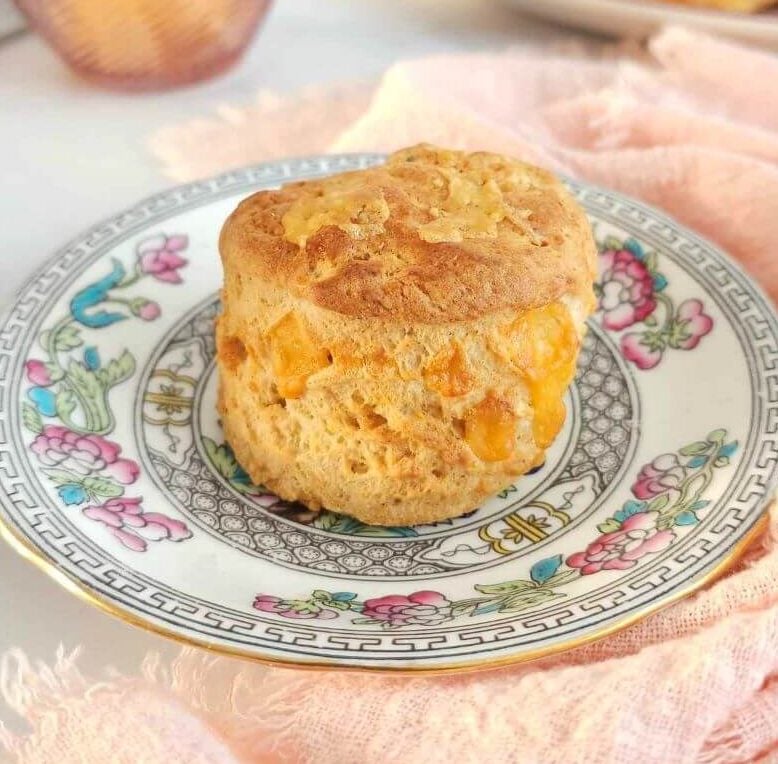
 More scone recipes: check out the other scone recipes or see the images below.
Some other gluten-free recipes – go to gluten-free bakes.
Reference: 1 – freezing scones information from FreezeIt.co.uk.
More scone recipes: check out the other scone recipes or see the images below.
Some other gluten-free recipes – go to gluten-free bakes.
Reference: 1 – freezing scones information from FreezeIt.co.uk.


Nutritional Information: I am not a qualified nutritionist and all values are approximate. 1 serving is based on using all ingredients and with a yield of 10 scones, where one scones is 1 serving. 1 scones but not including any toppings. Make bigger or smaller scones, and these values will change. All values calculated via MyFitnessPal.com.
Click an image below to jump to the other scone recipes, or go to the scones page.




Subscribe For More Recipes
Want more great recipes, tips, baking information & newsletters? Then please consider subscribing by adding your email address below. Be sure to check for a confirmation email & respond back, so you can follow me & receive your free emails. Your personal information will not be shared with a third party. PLUS: a FREE oven & air fryer temperature conversions table as a thankyou!
Join My Facebook Group
Why not also join my – Facebook group Easy Online Baking Lessons, dedicated to this baking lessons website, as well as providing one-on-one support with myself & my team? Be sure to answer all security questions when requesting to join.
Follow me on social media:
Happy Learning & Baking!
Caro x
Gluten Free Air Fryer British Scones
Search For Something You Fancy!
Caroline’s Easy Baking Lessons
References:
- Freezing scones information: from FreezeIt.co.uk-freezing scones ↩︎




